Social
When a police officer fired two shots into the air and then pointed his gun at the crowd in the early hours of 9 February, the crowd did not disperse. It was the group of police officers who needed to retreat even though they have guns with 12 bullets each. In the few hours afterwards, thousands of police officers were deployed to the scene. They were attacked by the mob and more than 90 of them were seriously injured despite the fact that the officers had guns and anti-riot gears. Why?
A group of Singaporean friends visited me a while ago. When I told them Hong Kong has no death penalty, they were amazed and asked why. (I honestly didn't know why and still don't.) When they learned we have no corporal punishment at home or at school, they were stunned and speechless. I am sure people in Taiwan and Korea have similar feelings.
There are a lot of things people outside of Hong Kong (especially those in Beijing) simply do not know or understand about Hong Kong. Kids here are spoiled brat. Because of the lowest birth rate in the world, parents and grandparents often treat their own children like little emperors or empresses. Parents and teachers do not and are unable to teach their children the most basic things in life: integrity, loyalty, respect and conscientiousness. (Never mind about manners and etiquette.) Instead they are indoctrinated with materialism and the-ends-justify-the-means attitude from early ages. Local TV soap operas are filled with glorification of selfishness and dishonesty.
One however cannot blame the parents. Hong Kong has the one of the highest divorce rates in Asia. We also have the highest extramarital affairs rate in Asia. (A recent survey suggests about 50% admits having extramarital affairs.) People here are so unhappy about their lives that the government had to air a TV commercial telling people not to commit suicide if you are a single parent! (The underlying message: the Social Welfare Department don't have the resources to take care of your kid if you kill yourself!)
In 2010, the Hospital Authority said there are about 1.7 million people in Hong Kong with varying degrees of mental illnesses. It is now 2016, it would not be an exaggeration if one were to speculate that the number has now exceeded 2 millions. (This city has a population of 7.2 million.) A patient who may have symptoms of mental illnesses needs to wait at least 3 years before they will be seen by a doctor in a public hospital (click here). And the government is planning to cut funding to the Hospital Authority (even though it has a huge fiscal surplus years after years). Fortunately, I am happy to report that the Secretary for Health and Welfare has now decided to tell his patients on how to prevent mental illnesses. (The message: instead of waiting for 3 years, why not just be happy!!)
Is Cultural Revolution spreading to Hong Kong? Here's a take from the Wall Street Journal. Will there be public humiliation of teachers, intellectuals and government officials in a few months?


Will Hong Kong become another Tibet (here)? Before the answer is revealed in 2047, a few people are planning on leaving this place. (Hey, better late than never!!)
Economical
The following numbers are self-explanatory:
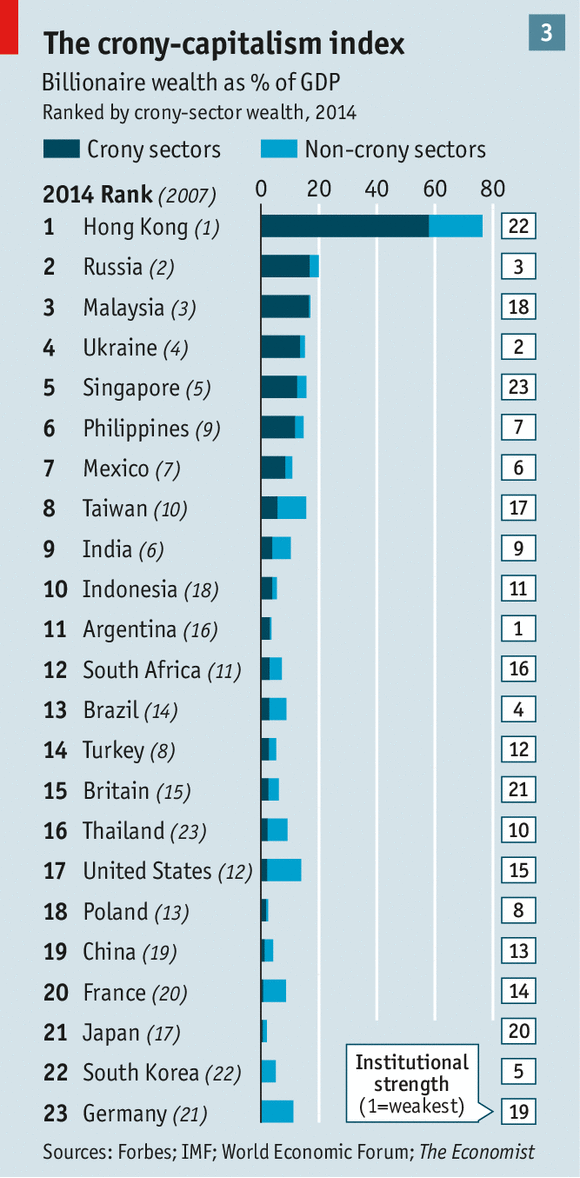
- Hong Kong is ranked number 1 in the world in crony capitalism index by the Economist (here).
- Reuters reported that there were 100,000 people living in cage home (here). These people do not protest about anything.
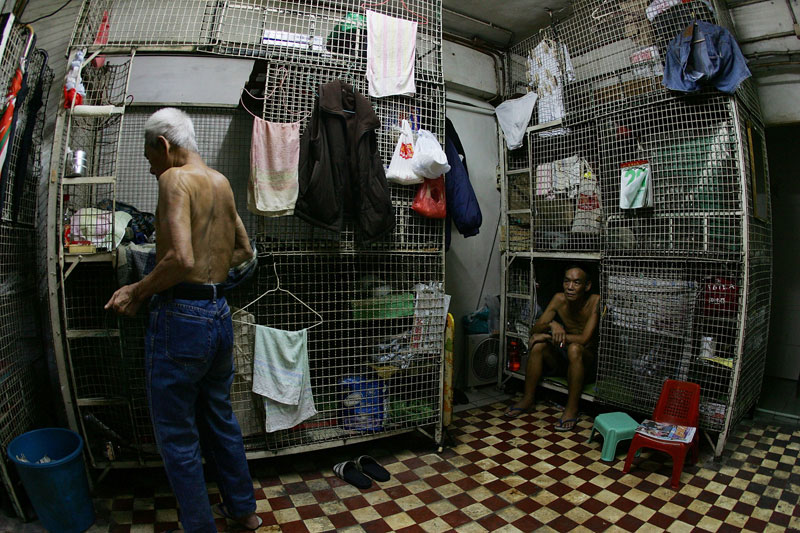
- Here's a report from CNN on cage home.
- Recently released figures from the closely-watched 12th Annual Demographia International Housing Affordability Survey 2016 suggest that Hongkongers need to stash their earnings under the mattress for 19 years – assuming they don’t eat or pay their taxes in the meantime – before they can afford a matchbox-sized apartment. (here).
- Here's poverty in Hong Kong in one graph.

- Just in case you haven't figured it out yet. In order to stop the flight of capital from the territory in the run-up to 1997 handover, the Communist Party promised the local tycoons that crony capitalism will continue after 1997. As for the 1 million people who had left the place in 1980s and 1990s, there is no worry--motherland will replenish Hong Kong with Mainland Chinese. If you are not happy here, feel free to leave.
Political
Let's get one thing clear: Beijing will not replace CY Leung in the coming months. After the massive protest on 1 July 2003, which was peaceful, Tung Chee-hwa did not leave his post until March 2005, which was about 20 months later. Tung left in 2005 because (i) he wanted to leave, (ii) Beijing had already found a candidate who can replace Tung, and (iii) that candidate Donald Tsang was acceptable to Beijing, the local tycoons, Mr Tung himself and senior civil servants. More importantly, by March 2005, the sentiment and the economy of Hong Kong had vastly improved from that of July 2003. The underlying message was crystal clear: Beijing would not react nor seemed to react to popular demands, especially if the demands were deemed to be a challenge to its authority. Replacing CY Leung now would be seen as an affirmation of the grievances of the protesters of the 2014 Occupy Central Movement and the 2016 Fishball Revolution. The Communist Party would do no such thing.
For the chief executive election in 2017, there are now two people who are acceptable to Beijing, the local tycoons and senior civil servants: John Tsang and Antony Leung. (John Tsang shove hands with Xi Jinping in 2015 and Antony Leung has the backings of Tung Chee-hwa and Li Ka Shing.) These two people had witnessed what happened to Henry Tang, who ran against CY Leung for the Chief Executive Election in 2012. We all knew what happened to Donald Tsang too in 2012, whom CY Leung considers a rival. (The prosecution against Donald Tsang is still ongoing as of February 2016.) Anyone who might appeared to be a challenge to CY Leung will be destroyed by him. No serious candidates from the establishment will come forward to challenge him (especially before the 2017 election), unless and until Beijing has decided to act.
As of February 2016, Xi Jinping is busy with three things: (i) anti-corruption drive against powerful rivals, including perhaps his erstwhile mentor Zeng Qinghong, (ii) consolidation of ever more power, and (iii) getting his men ready in the run-up to the 19th National Congress so as to grab as much power and posts in the Politburo and the Central Committee as possible. Replacing CY Leung before 2017, even if that's what Xi wants, is simply not a priority given those three overriding goals.
Conclusion
Let us "Appreciate Hong Kong" together
with some fireworks. Here's a clip of the celebration a few hours after the Riot!! Enjoy!


No comments:
Post a Comment